
What I enjoy most about this recipe is how a handful of everyday ingredients can transform fresh spinach into something truly delicious. The classic version has a delicate, nutty flavor, while the spicy version brings a rich, slightly fiery kick. Whether I serve it freshly prepared or chilled, this Korean spinach side dish always adds freshness and flavor to my table.
Ingredients
(Tip: You’ll find the full list of ingredients and measurements in the recipe card below.)
For the Classic Spinach Namul
1 bunch spinach, cleaned
2 teaspoons Korean soup soy sauce (gukganjang), or 1 tablespoon regular soy sauce
1 clove garlic, finely minced
2 teaspoons sesame oil
2 teaspoons toasted sesame seeds
1 green onion, finely chopped
For the Spicy Spinach Namul
1 bunch spinach, cleaned
2 teaspoons Korean chili paste (gochujang)
1 teaspoon Korean soybean paste (doenjang)
1 clove garlic, finely minced
2 teaspoons sesame oil
2 teaspoons toasted sesame seeds
Directions
Prepare the Spinach:
I start by washing the spinach thoroughly under cold running water to remove any dirt. If the spinach has particularly thick or tough stems, I trim them before cooking.
Blanch the Spinach:
I bring a large pot of water to a rolling boil and add a small pinch of salt. Once the water is boiling, I add the spinach and blanch it for approximately 30 seconds, just until the leaves wilt and turn bright green.
I make sure not to overcook the spinach because I want it to remain tender without becoming mushy.
Cool the Spinach:
As soon as the spinach is blanched, I drain it and rinse it thoroughly under cold running water. This stops the cooking process and helps preserve its beautiful green color.
I continue rinsing until the spinach is completely cool.
Remove Excess Water:
I gather the cooled spinach in my hands and gently but firmly squeeze out as much excess water as possible.
I find this step especially important because too much moisture can dilute the seasonings and make the finished dish watery.
Once drained, I place the spinach on a cutting board and cut it into approximately 3-inch pieces.
Prepare the Classic Spinach Namul:
I place the spinach prepared from the first bunch into a mixing bowl. Then I add the Korean soup soy sauce, minced garlic, sesame oil, toasted sesame seeds, and finely chopped green onion.
Using clean hands, I gently toss and massage the spinach until all the seasonings are evenly distributed.
I taste the spinach and adjust the seasoning if necessary. I love how the sesame oil and garlic complement the natural sweetness of the spinach.
Prepare the Spicy Spinach Namul:
For the spicy version, I place the spinach prepared from the second bunch into a separate mixing bowl.
I add the gochujang, doenjang, minced garlic, sesame oil, and toasted sesame seeds.
I first mix the gochujang and doenjang together with my fingers to help distribute the pastes evenly. Then I gently massage the seasonings into the spinach until every piece is well coated.
I taste the mixture and adjust the amount of chili paste if I want a stronger spicy flavor.
Serve and Enjoy:
Once both versions are ready, I transfer them to separate serving bowls and sprinkle a few extra toasted sesame seeds on top if desired.
I enjoy serving Korean Spinach Namul immediately, but I also love refrigerating it briefly before serving. The cool, savory spinach pairs beautifully with warm steamed rice and Korean-style main dishes.
Servings and Timing
Prep Time: 10 minutes
Cooking Time: 10 minutes
Total Time: 20 minutes
Servings: 4 servings
Calories (recipe estimate): 90 kcal per serving
Variations
Extra Spicy Spinach Namul:
When I want a stronger kick of heat, I add a little extra gochujang or a small pinch of Korean red pepper flakes (gochugaru). This gives the spinach a bolder flavor without requiring many additional ingredients.
Garlic Sesame Spinach Namul:
For a more aromatic classic version, I increase the amount of minced garlic slightly. I love how the fresh garlic enhances the nutty sesame oil and savory soy sauce.
Mild Spinach Namul:
When I prefer a gentler flavor, I skip the gochujang and season the spinach with sesame oil, garlic, sesame seeds, and a small amount of soy sauce. This creates a simple side dish that works beautifully with almost any meal.
Spinach Namul with Carrots:
I sometimes add a small amount of finely shredded, lightly blanched carrot for extra color and texture. The carrots bring a subtle sweetness that complements both the classic and spicy versions.
Spinach Namul for Bibimbap:
When I make homemade bibimbap, I prepare the classic version with slightly lighter seasoning. I then arrange it over warm rice alongside other vegetables, a fried egg, and gochujang sauce.
Storage/Reheating
How I Store Korean Spinach Namul:
I store leftover spinach namul in an airtight container in the refrigerator. For the best freshness, texture, and flavor, I prefer eating it within 2 to 3 days.
I keep the classic and spicy versions in separate containers so their flavors remain distinct.
I also make sure the spinach has cooled and is refrigerated promptly, rather than leaving it at room temperature for extended periods.
Can I Freeze Spinach Namul?
I generally avoid freezing spinach namul because the spinach can become overly soft and watery after thawing.
Although freezing is possible, I find that freshly prepared or refrigerated spinach has a much better texture and flavor.
How I Reheat Spinach Namul:
I usually don’t reheat Korean spinach namul because it is traditionally delicious served cold or at room temperature.
When I prefer it warm, I gently heat a small portion in a skillet over low heat for a short time, just until warmed through.
I avoid cooking it for too long because excessive heat can make the spinach mushy and reduce the fresh sesame aroma.
My Meal Prep Tip
When I prepare this dish ahead of time, I squeeze the spinach thoroughly before adding the seasonings. This helps prevent excess liquid from collecting in the storage container.
I also give the spinach a quick toss before serving to redistribute the sesame oil and seasonings.
FAQs
What is Korean Spinach Namul?
Korean Spinach Namul, also called Sigeumchi Namul, is a traditional Korean vegetable side dish made with briefly blanched spinach and flavorful seasonings.
I usually prepare the classic version with sesame oil, garlic, soy sauce, and sesame seeds. For a spicy variation, I use gochujang and doenjang to add a richer, bolder flavor.
It is commonly served as part of a Korean meal alongside rice and other small side dishes known as banchan.
Can I Use Frozen Spinach Instead of Fresh Spinach?
Yes, I can use frozen spinach when fresh spinach is unavailable. However, I prefer fresh spinach because it produces a better texture and a brighter appearance.
When using frozen spinach, I thaw it completely, squeeze out as much moisture as possible, and then mix it with the seasonings. I skip the blanching step if the frozen spinach has already been cooked.
I find that removing excess water is especially important when working with frozen spinach.
Why Do I Need to Blanch the Spinach Before Seasoning It?
I blanch the spinach to soften the leaves, reduce their volume, and create the tender texture that makes Korean spinach namul so enjoyable.
Blanching also helps preserve the spinach’s vibrant green color when followed by a quick rinse under cold water.
I only blanch it for about 30 seconds because longer cooking can make the leaves too soft.
Can I Make Korean Spinach Namul Without Sesame Oil?
Yes, I can prepare spinach namul without sesame oil, although the flavor will be different.
Sesame oil contributes the distinctive nutty aroma that I associate with traditional Korean spinach namul.
If I don’t have sesame oil, I can use a small amount of neutral oil or simply omit the oil. I like adding extra toasted sesame seeds in that case to maintain some of the nutty flavor.
What Can I Serve with Korean Spinach Namul?
I love serving Korean spinach namul with steamed white rice, Korean barbecue, bulgogi, grilled chicken, or tofu dishes.
It is also one of my favorite vegetables to include in homemade bibimbap because its savory sesame flavor pairs wonderfully with rice, eggs, and gochujang sauce.
For a complete Korean-inspired meal, I often serve both versions alongside kimchi, seasoned bean sprouts, and a warm bowl of rice.
Conclusion
Korean Spinach Namul – Classic and Spicy is a simple yet incredibly flavorful side dish that I love preparing whenever I want something fresh, nutritious, and satisfying. With just a few ingredients and about 20 minutes, I can create two delicious versions of this traditional Korean banchan.
The classic spinach namul offers a delicate balance of savory soy sauce, fragrant garlic, and nutty sesame oil, while the spicy version delivers a richer flavor thanks to the combination of gochujang and doenjang.
I especially appreciate how versatile this recipe is. Whether I serve it with steamed rice, Korean barbecue, bibimbap, or a simple homemade dinner, it adds color, freshness, and delicious flavor to the meal.
Whenever I have fresh spinach in my kitchen, this is one of my favorite ways to transform it into an easy Korean side dish that is both comforting and full of flavor.
📖 Recipe:
Print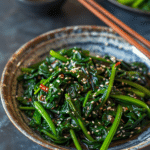
Korean Spinach Namul – Classic and Spicy
- Total Time: 20 minutes
- Yield: 4 servings
- Diet: Vegan
Description
Korean Spinach Namul, also known as Sigeumchi Namul, is a delicious Korean side dish featuring tender blanched spinach tossed with savory seasonings. Enjoy two flavorful versions: classic garlic-sesame spinach with soy sauce and spicy spinach with gochujang and doenjang.
Ingredients
For the Classic Spinach Namul:
1 bunch spinach, cleaned
2 teaspoons Korean soup soy sauce (gukganjang), or 1 tablespoon regular soy sauce
1 clove garlic, finely minced
2 teaspoons sesame oil
2 teaspoons toasted sesame seeds
1 green onion, finely chopped
For the Spicy Spinach Namul:
1 bunch spinach, cleaned
2 teaspoons Korean chili paste (gochujang)
1 teaspoon Korean soybean paste (doenjang)
1 clove garlic, finely minced
2 teaspoons sesame oil
2 teaspoons toasted sesame seeds
Instructions
- Prepare the spinach: Thoroughly wash both bunches of spinach under cold running water to remove dirt and sand. Trim any thick or tough stems.
- Blanch the spinach: Bring a large pot of water to a rolling boil and add a small pinch of salt. Add the spinach and blanch for approximately 30 seconds, until the leaves wilt and turn bright green. Avoid overcooking.
- Cool the spinach: Immediately drain the spinach and rinse under cold running water until completely cool. This stops the cooking process and preserves its vibrant color.
- Remove excess moisture: Gently but firmly squeeze the cooled spinach to remove as much water as possible. Transfer to a cutting board and cut into approximately 3-inch pieces. Divide the spinach into two equal portions.
- Make the classic spinach namul: Place one portion of spinach in a mixing bowl. Add the Korean soup soy sauce, minced garlic, sesame oil, toasted sesame seeds, and chopped green onion. Gently toss and massage with clean hands until evenly seasoned. Taste and adjust the seasoning if needed.
- Make the spicy spinach namul: Place the remaining spinach in a separate mixing bowl. Add the gochujang, doenjang, minced garlic, sesame oil, and toasted sesame seeds. Mix the chili paste and soybean paste together, then gently massage the seasonings into the spinach until evenly coated. Adjust the gochujang to your preferred spice level.
- Serve: Transfer the classic and spicy spinach namul to separate serving bowls. Garnish with additional toasted sesame seeds if desired. Serve immediately or refrigerate briefly and enjoy chilled alongside steamed rice, bibimbap, Korean barbecue, or other Korean dishes.
Notes
Fresh spinach: Fresh spinach provides the best texture and vibrant green color. Wash thoroughly before blanching.
Soy sauce substitution: Replace 2 teaspoons Korean soup soy sauce with 1 tablespoon regular soy sauce if necessary. Adjust to taste.
Frozen spinach: Thaw completely and squeeze out excess moisture before seasoning. Skip blanching if the frozen spinach is already cooked.
Extra spicy variation: Add additional gochujang or a pinch of Korean red pepper flakes (gochugaru) for more heat.
Garlic sesame variation: Increase the minced garlic slightly in the classic version for a stronger garlic flavor.
Mild variation: Omit gochujang and season with sesame oil, garlic, toasted sesame seeds, and a little soy sauce.
Carrot variation: Add finely shredded, lightly blanched carrots for extra color, texture, and natural sweetness.
Sesame oil alternative: Substitute a small amount of neutral oil or omit the oil entirely. Add extra toasted sesame seeds for nutty flavor.
Prevent watery spinach: Thoroughly squeeze the blanched spinach before adding seasonings to prevent diluted flavors.
Serving suggestions: Serve with steamed rice, bulgogi, grilled chicken, tofu, bibimbap, kimchi, or other Korean banchan.
Storage: Refrigerate leftovers promptly in airtight containers for 2 to 3 days. Store the classic and spicy versions separately.
Freezing: Freezing is not recommended because thawed spinach may become overly soft and watery.
Reheating: Traditionally served cold or at room temperature. If preferred warm, gently heat a small portion in a skillet over low heat until warmed through.
Meal prep: Prepare ahead, refrigerate, and toss gently before serving to redistribute the seasonings.
Nutrition: Nutritional values are approximate per serving and depend on spinach bunch size, seasoning brands, and portion distribution.
- Prep Time: 10 minutes
- Cook Time: 10 minutes
- Category: Side Dish
- Method: Blanching
- Cuisine: Korean
Nutrition
- Serving Size: 1 serving (1/4 of recipe, including both variations)
- Calories: 90 kcal
- Sugar: 2 g
- Sodium: 540 mg
- Fat: 6 g
- Saturated Fat: 0.9 g
- Unsaturated Fat: 5.1 g
- Trans Fat: 0 g
- Carbohydrates: 7 g
- Fiber: 3 g
- Protein: 4 g
- Cholesterol: 0 mg


